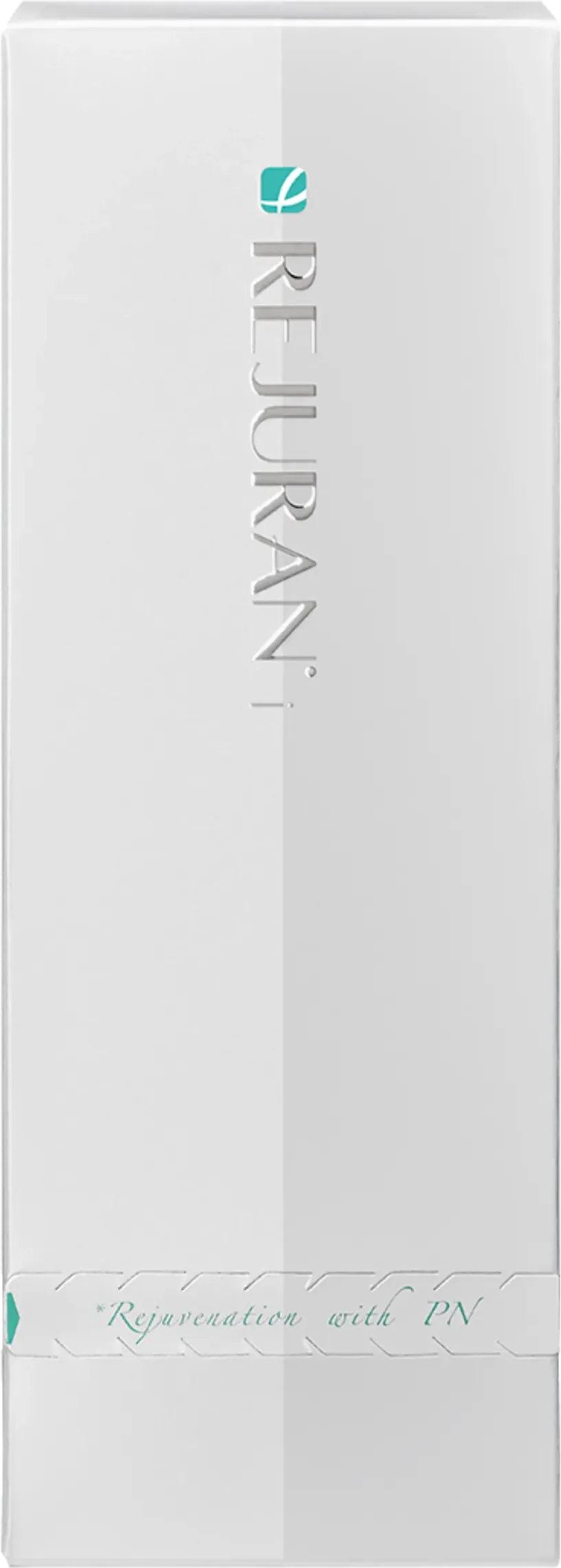
Rejuran Korea before and after comparisons only make sense when they follow a full course of polynucleotide (PN) injections rather than a single visit. Rejuran is a PN skin booster, not PDRN, injected as hundreds of tiny dermal points per session. Straight after treatment the face looks worse, not better: raised bumps, pinpoint marks and some redness. Those settle over a few days. Texture, fine crinkling and a firmer feel tend to build gradually across a course of several sessions, and the change is subtle compared with filler. A fair photo comparison therefore needs the same light, angle and expression, and a date that falls weeks after the last session.
 PharmaResearch · Rejuran
Guide
What a PN course changes, and when it shows
A course is usually planned as several sessions spaced about 7 to 10 days or more apart, so the real comparison point arrives weeks after the first appointment. Changes are gradual and cumulative.
The effect tends to be described as finer texture, a smoother surface under side light and a denser feel when the skin is pinched, rather than lifted contours. Reported duration is roughly four to six months, after which skin drifts back toward its baseline unless maintenance sessions follow.
| Point in the course | What a camera usually records | What it does not mean |
|---|---|---|
| Same day | Raised bumps in a grid, pinpoint marks, flushing | Swelling, not volume gained |
| Days 1 to 3 | Bumps flattening, occasional small bruise | A bruise is not a failed session |
| After session two or three | Slightly finer surface under raking light | Change is real but small |
| Several weeks after the last session | The honest comparison window | Results vary from person to person |
| Four to six months later | Gradual return toward baseline | Not a permanent change |
Guide
Why first-week photos can mislead
Post-injection embossing makes the skin look puffed and taut for a short time. A photo taken in that window can be mistaken for tightening, while a photo taken on day one can look alarming. Neither shows the outcome.
Research on PN formulations tracks these short-term marks directly. In a 2025 randomized, patient-blinded split-face study in Aesthetic Plastic Surgery, Jeon and colleagues gave 15 participants a conventional PN filler on one side of the face and an ionization-adjusted version on the other. Jeon's team recorded embossing on 56.7% of conventional sides versus 13.3% of adjusted sides, and erythema on 60% versus 40%. Wrinkle and global aesthetic scores improved on both sides without a statistical difference between them, which suggests the marks a camera picks up early say little about the eventual result.
Guide
How to judge a gallery a clinic shows you
PN changes are subtle enough that small shifts in setup can create or erase them. Before trusting any pair of images, check that the conditions match on both sides.
- Light: same direction and strength; overhead light flattens texture, side light exaggerates it.
- Angle and distance: identical head tilt and framing, ideally with a fixed marker such as an ear or hairline.
- Expression and makeup: neutral face, bare skin, no fresh moisturizer or glow-finish products in the later shot.
- Timing: the after photo is dated weeks past the final session, not the day after.
- Treatment record: only PN in that period, since a laser or filler in the same months makes credit hard to assign.
- Editing: no smoothing filters, consistent white balance, same camera.
Guide
Side effects worth logging alongside the photos
Common, short-lived effects include stinging during injection, raised bumps, redness, mild swelling and small bruises around a few points. Bruising can take about a week to fade fully and may need concealer for scheduled photos or meetings.
Less common problems include persistent lumps, prolonged redness or signs of infection, which need the treating doctor's review. Park and colleagues described long-chain PN filler use and its complications in a 2015 case series of five patients in Dermatologic Therapy; a series that small shows what can happen, not how often. Anyone pregnant, with active skin infection on the area or a known allergy to fish-derived products should raise it before treatment.
Guide
Building your own record across a short trip
Take a baseline set before the first injection: front and both sides, same window or lamp, same distance. Repeat the set before each later session, not right after it, and once more at home several weeks after the last one.
Keep a short note per date: product used, areas treated, how long bumps lasted, any bruising. If the course spans two trips, that log lets a doctor at home or on the next visit see what actually changed.
Evidence
Research behind this page
- Efficacy of Ionization-Adjusted PN Filler in Minimizing Injection Pain: A Randomized, Patient-Blinded, Split-Face StudyAesthetic Plastic Surgery · 2025 · doi:10.1007/s00266-025-05320-x
In 15 participants, an ionization-adjusted PN filler lowered injection pain and showed fewer cases of erythema and embossing than conventional PN, with similar wrinkle improvement on both sides.
- Long-chain polynucleotide filler for skin rejuvenation: efficacy and complications in five patientsDermatologic Therapy · 2015 · doi:10.1111/dth.12299
A five-patient case series describing skin changes after long-chain polynucleotide filler injections and the complications observed.
FAQ
Questions about Rejuran in Gangnam
How many sessions before PN photos look different?
Most people need at least two or three sessions before a side-lit photo shows a visible change in texture. One session mainly produces temporary bumps and marks that fade within days. Because the effect builds gradually, the comparison is fairest several weeks after the final session of a planned course. Ask the treating doctor how many sessions they expect for your skin before you start, so your photo dates line up with that plan.
Why does my skin look tighter the day after injections?
That tight, plump look is usually short-term swelling and embossing from the injected points, not a lasting result. It tends to flatten within one to three days as the product spreads and the skin settles. In a 2025 split-face study in Aesthetic Plastic Surgery, Jeon and colleagues recorded embossing on many conventional PN sides, which is why early photos are poor evidence. Judge the change later, once the surface is calm.
Can makeup hide the marks for photos after treatment?
Usually yes, but most doctors ask you to wait until the next day before applying makeup over injection points. Mineral concealer covers small bruises well once the skin has closed, and gentle cleansing removes it without pressing on the points. If you need clear skin for an event, schedule the session about a week earlier so any bruise has time to fade without cover.
Do lighting tricks really change how before-and-after skin looks?
Yes, light direction alone can make fine lines appear or vanish in the same face. Overhead or front light flattens texture, while side light raised at an angle deepens every crease. Moisturizer, a different phone camera or warmer white balance can add a further glow. When reviewing any gallery, compare the shadows under the nose and jawline; if they differ, the setup changed and the comparison is weak.
Is a lump that lasts more than a week normal after PN?
A lump persisting beyond a week is less typical and should be shown to the treating doctor. Most injection bumps settle within a few days, and small bruises fade over about a week. A firm, tender or growing lump, warmth or spreading redness needs examination. Send a dated photo with your note on when it appeared; that record helps the doctor decide whether it needs treatment or simply time.